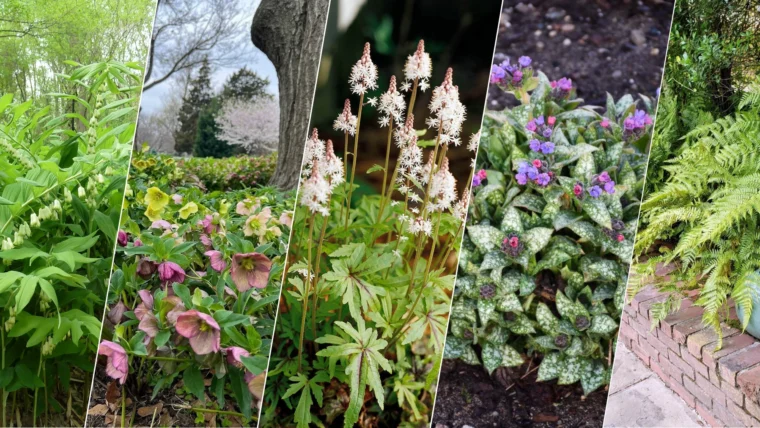
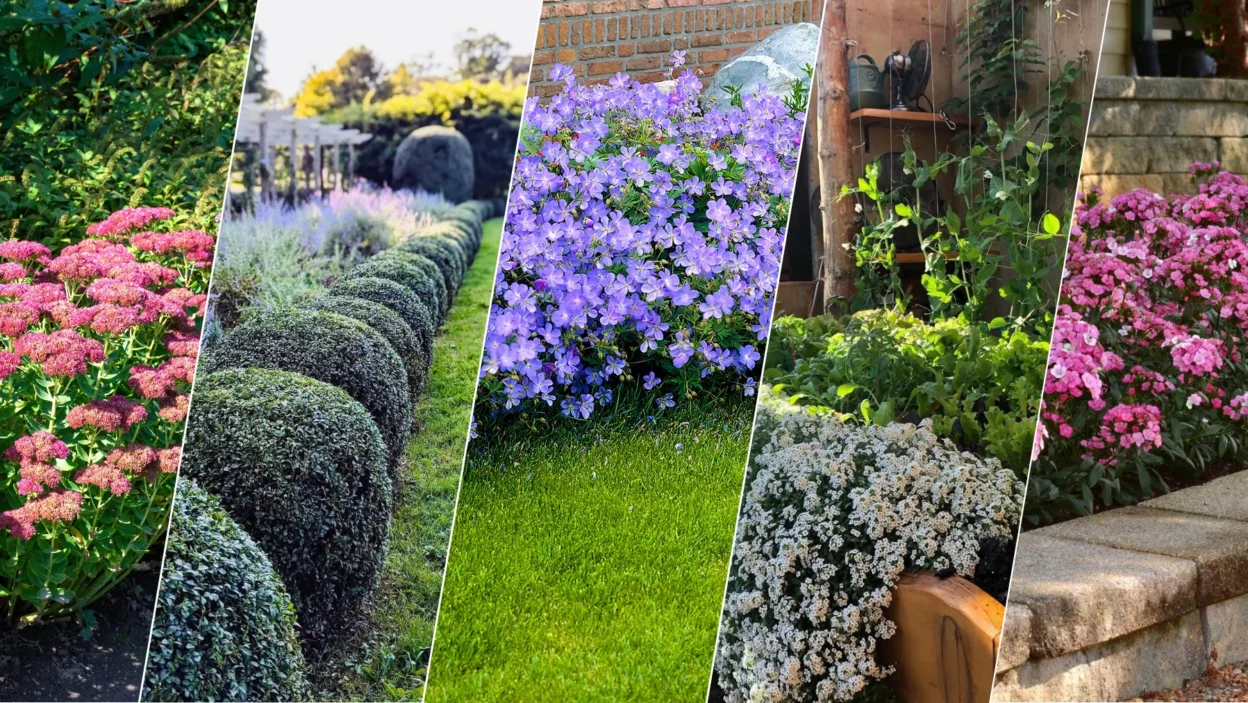
Let’s face it. We all want our gardens to look like they belong on a magazine cover… but preferably without selling a kidney to hire a professional landscaper. So what’s the secret? Edging plants.
Yep, edging plants are the unsung heroes of the garden. They define borders, keep things tidy, and somehow make even a chaotic flowerbed look intentional. Plus, they’re just plain pretty—who doesn’t love a crisp line of blooms or greenery softening the edges of a walkway?
Over the years, I’ve experimented (enthusiastically… and occasionally disastrously) with dozens of edging options. And I’ve finally nailed down the ones that not only look amazing but also don’t demand hourly attention like a toddler hopped up on sugar.
So whether you’re crafting a sleek modern look or going full cottagecore (I see you with your vintage watering can), I’ve put together a list of 21 go-to edging plants that actually pull their weight.
Let’s get straight to the first batch of garden charmers, shall we?
1. Lavender
I know, starting with a classic—how original. But come on, lavender is a superstar.
Have you ever brushed past a lavender border and not immediately stuck your nose in it like a bee with zero self-control? Exactly.
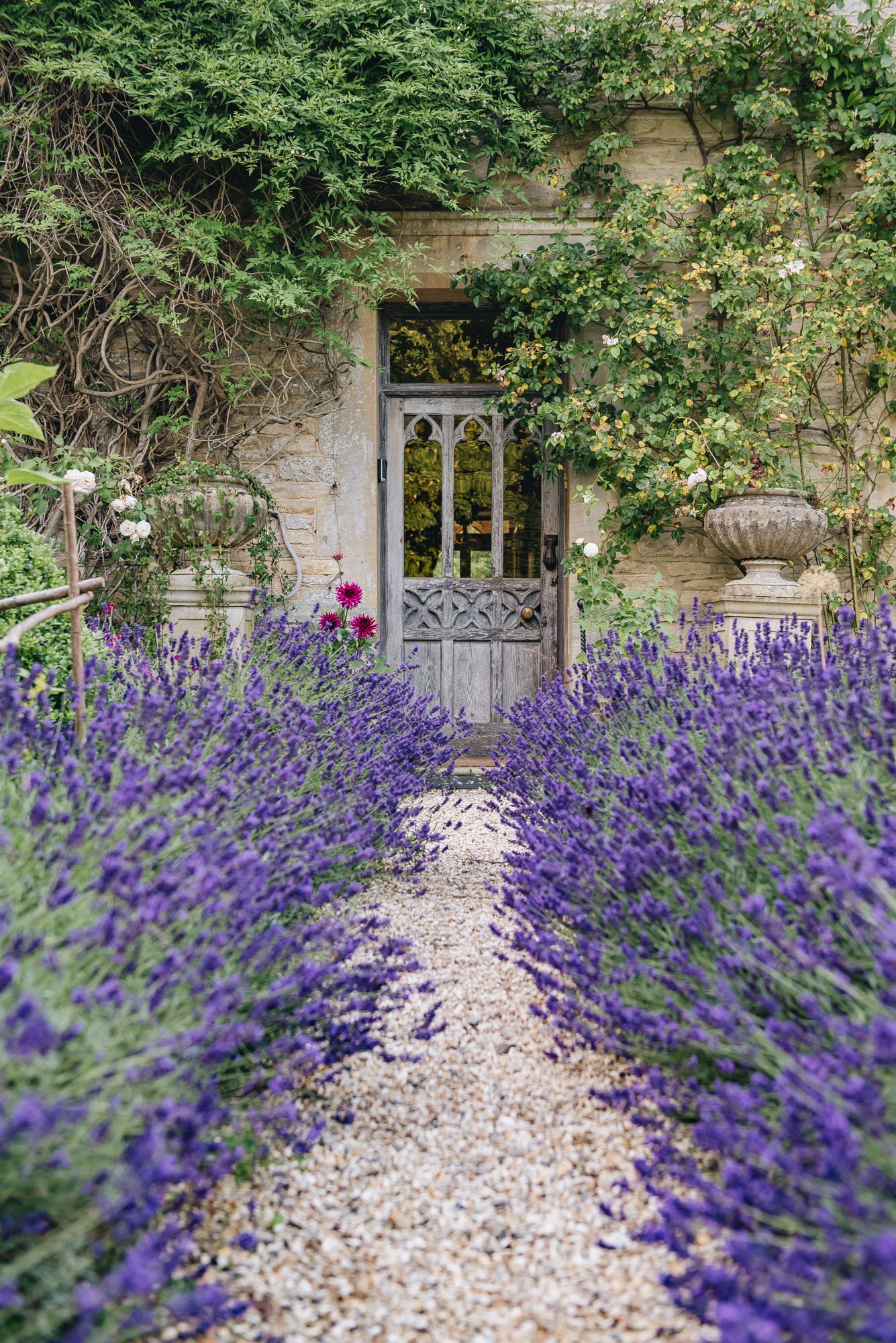
Lavender works perfectly for edging because it grows in neat little mounds, smells divine, and practically begs pollinators to throw a tiny garden party.
I planted a row along the walkway to my front door, and let me tell you—it’s like walking through a spa every morning. Except without the bathrobe.
Just a quick note: Lavender needs well-draining soil and loathes soggy roots with the fury of a thousand suns. So if your garden tends to hold water, maybe skip this one or build it up slightly.
Also? It thrives in full sun. Shade makes it sulk like a teenager who didn’t get their phone back.
2. Lamb’s Ear
Okay, not gonna lie—this one’s here largely because it feels like stroking a bunny.
But beyond being weirdly touchable, Lamb’s Ear (Stachys byzantina) is a low-growing, silvery green beauty that makes a dreamy soft edge to any border.
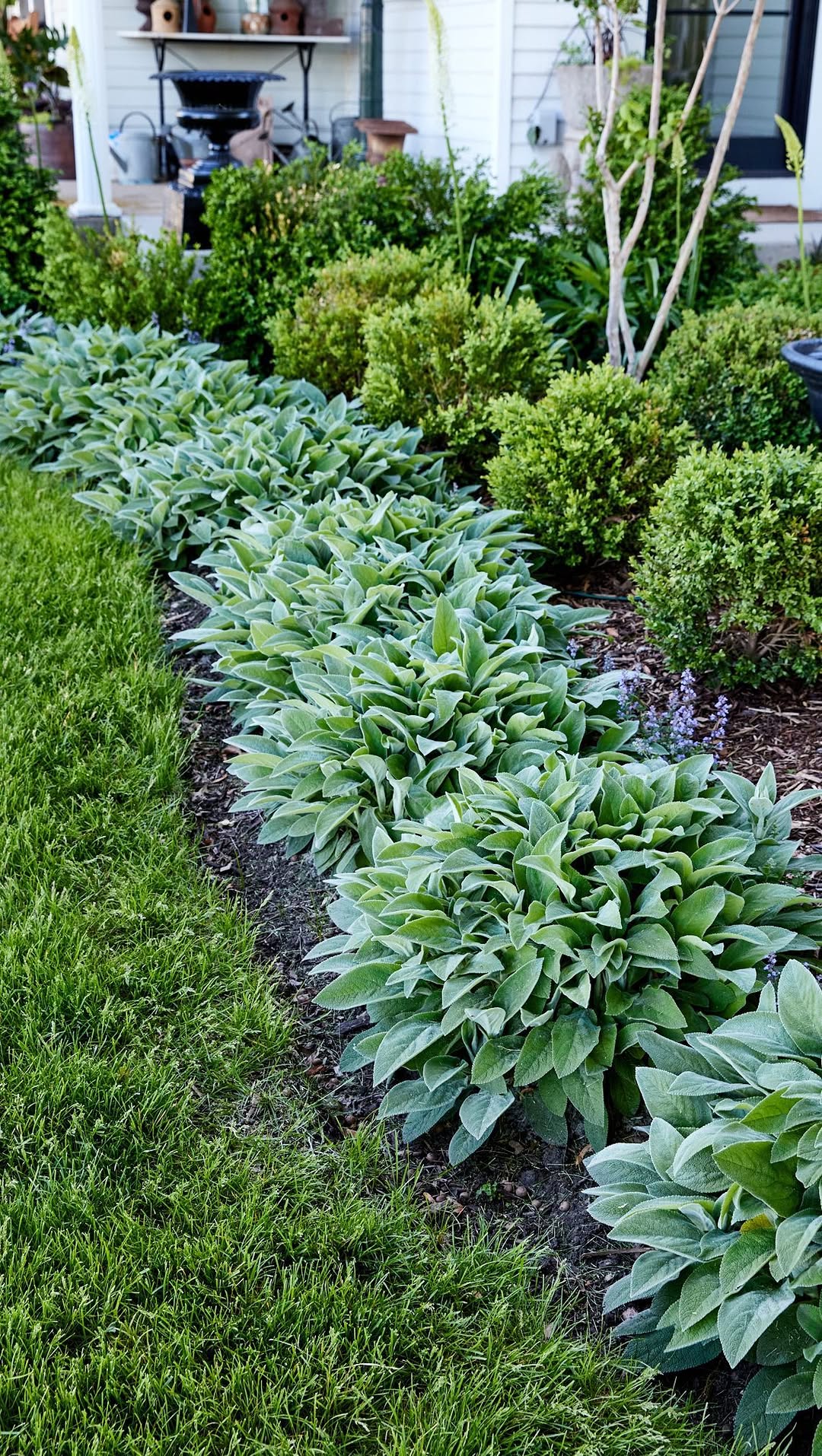
It’s especially charming when you’re going for that whimsical, fairy-tale garden vibe. You know, the kind of path you’d imagine a hedgehog would walk down wearing a tiny backpack.
In my own garden, I use it to soften the edges of stone steps. It spills over just enough to blur the hard lines, without going full jungle mode.
The best part? It’s drought-tolerant. AKA you water it once, forget about it, then remember it a month later and find it still looking like a Pinterest photo.
Just keep in mind: It can spread. So give it some room, or be ready to do a little trimming if it starts getting ambitious.
3. Boxwood
Let me guess—you’ve driven past a fancy house and thought, “What even IS that perfect little green wall?” Probably boxwood.
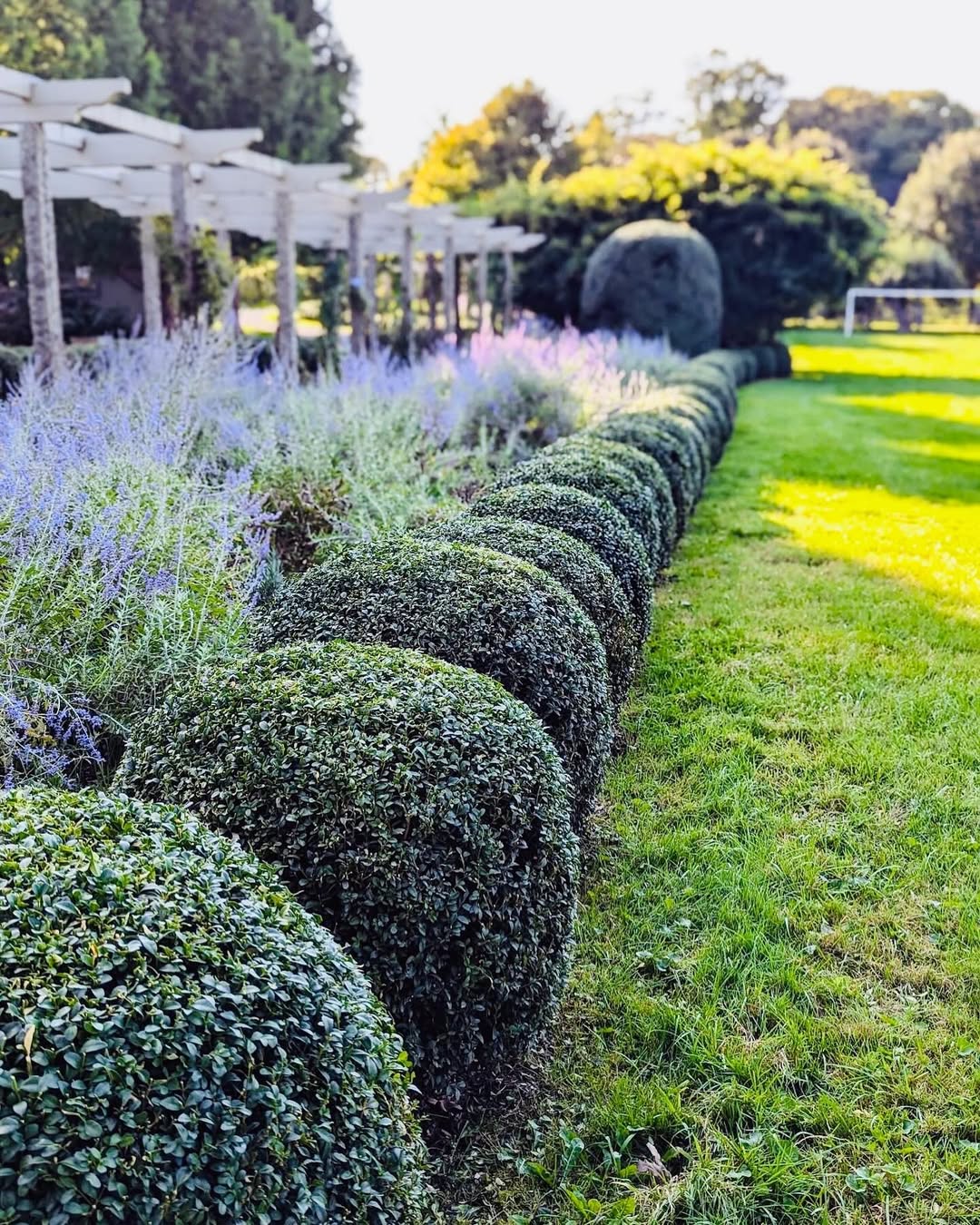
Boxwood brings structure, symmetry, and a zen-level sense of order that even Marie Kondo would applaud.
I love how you can sculpt it into little globes, squares, or even more creative shapes if that’s your thing. (Topiary animals anyone?)
Now, I’ll be honest—it’s not the fastest-growing plant. It’s more of a “slow and steady wins the front yard” type.
But once it’s in, it’s super low-maintenance and gives your borders that manicured, green-on-purpose look. No unruly stragglers here.
Pro tip: If you live in a colder climate, go with Korean or Japanese boxwood—they’re slightly hardier and less likely to freak out during winter.
Oh, and one more thing… it smells. Like, not good. So maybe don’t plant it right by your outdoor dinner table unless you enjoy Eau de Cat Pee.
4. Creeping Jenny
If you feel like your garden needs a pop of color that isn’t a flower, Creeping Jenny’s your gal.
This vibrant little overachiever has chartreuse green leaves so bright it practically glows—even on cloudy days. It hugs the ground and spills beautifully over edges, stone walls, pots—you name it.
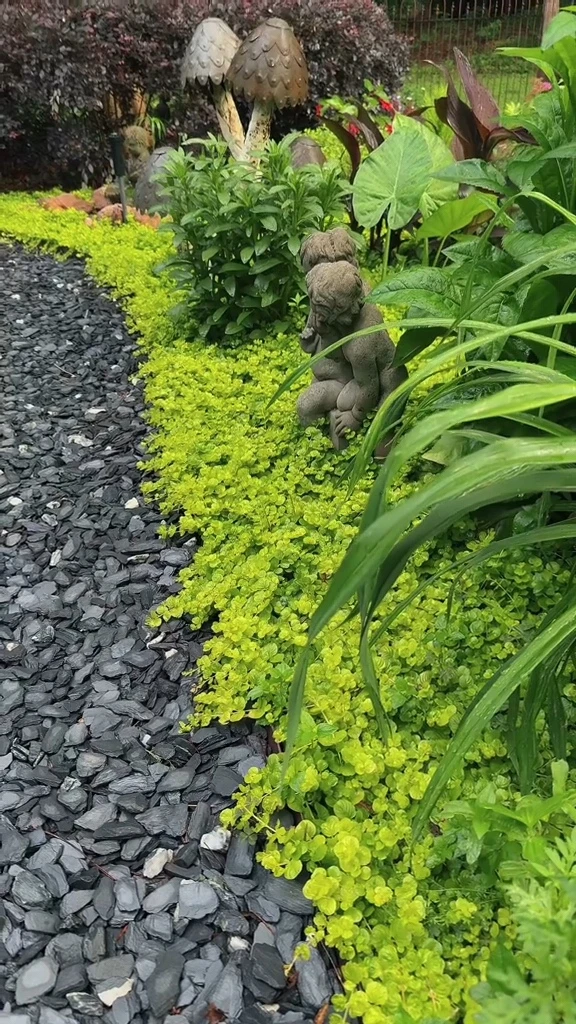
I’ve used it between stepping stones and around the base of taller plants to create this magical cascading effect. It’s like its mission in life is to make everything around it look better.
Now, full disclosure—it spreads. Like, really spreads. If contained, it’s stunning. Left to its own devices? You might start referring to it as “The Green Monster.”
So use edging materials or curvature to keep it in line. And maybe don’t let it near your prized veggies unless you want them swallowed whole.
But if you’re not into micromanaging? This one absolutely earns its keep.
5. Heuchera (Coral Bells)
You want color options? Heuchera laughs at your green-only garden.
We’re talking deep purple, blazing red, vivid chartreuse, even silver-flecked varieties. It’s like someone dumped a bag of Skittles into your flowerbed… but make it elegant.
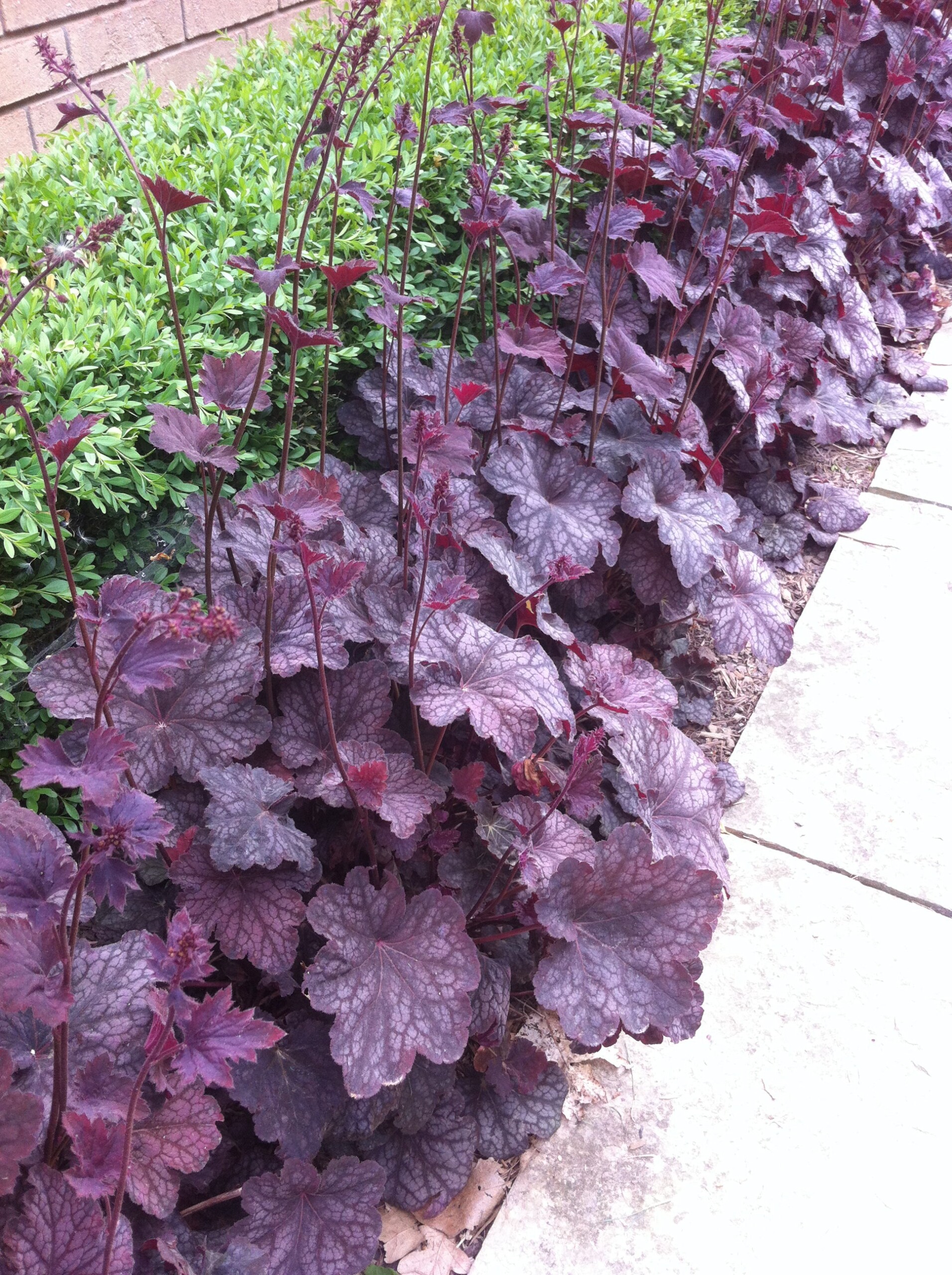
I use Heuchera to line paths in shady areas where not much else wants to live. They seem totally unbothered by dim light, which makes them solid allies in those “what the heck do I put here?” spots.
Plus, they stay compact. No rogue branches or unexpected outbursts.
And in late spring? They shoot up these delicate, fairy-wand-like flowers that look like they belong in a woodland dance scene.
They do best in part shade and rich, well-drained soil, so maybe don’t stick them in your rock-hard sun-blasted front lawn and expect miracles. But if you treat them well? Total showstoppers.
6. Dwarf Mondo Grass
Alright, hear me out—it looks like regular grass. But better.
Dwarf Mondo Grass is like the lawn’s cooler, more fashionable cousin. It grows in tight, neat tufts and gives you that crisp border vibe without any mowing. 🙌
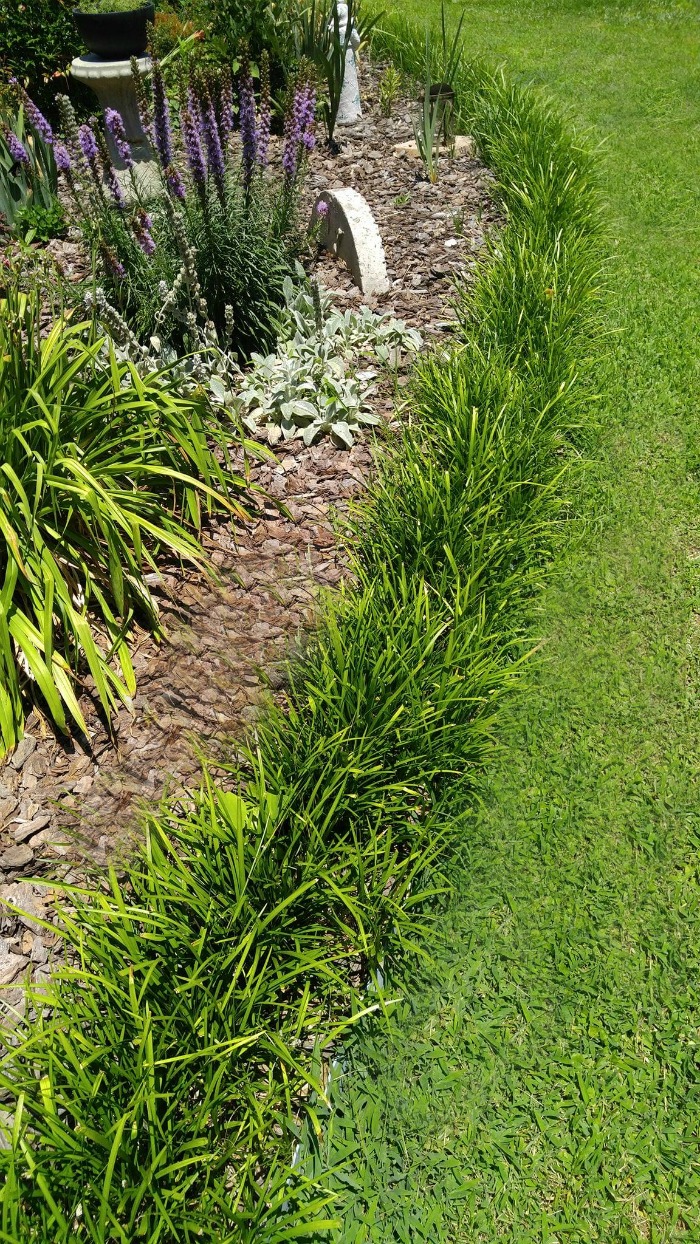
It’s evergreen, stays tiny (we’re talking 2–4 inches), and thrives in part shade to shade. So if you’ve got that awkward shady spot where nothing seems to “edge” properly? Mondo Grass is your savior.
I’ve planted it between pavers and even used it as a low sea of green in front of hydrangeas. It just quietly does its job and looks fabulous doing it.
Bonus: It’s slow growing, but that just means less maintenance. And that’s never a bad thing, yeah?
7. Alyssum
You ever walk past a garden and catch a whiff of honey in the air, and then do a full 180 trying to find the source? That’s probably sweet alyssum whispering hello.
These tiny, cloud-like flowers form soft mounds along edges and breathe ✨life✨ into any border.
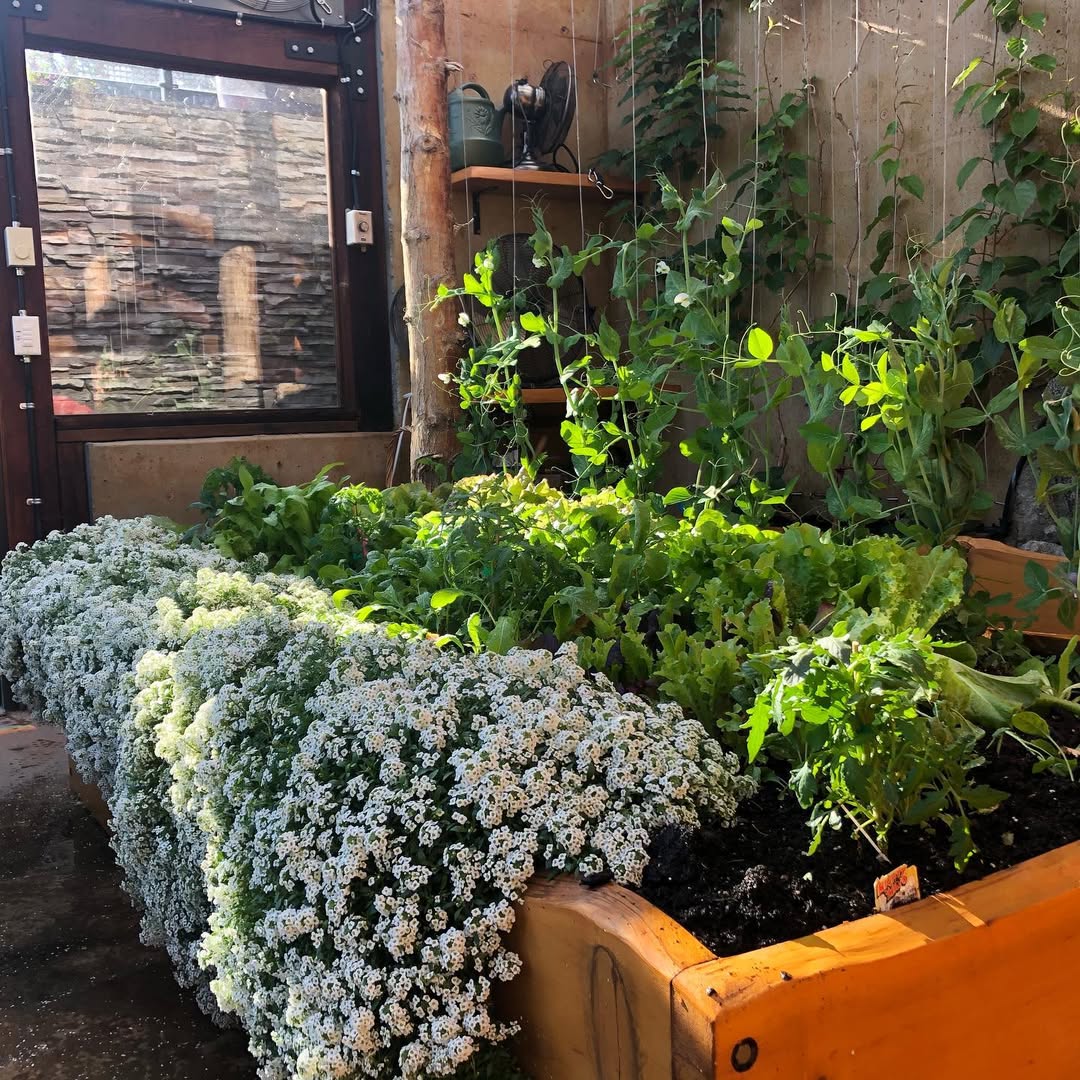
You know what I love most about Alyssum? It’s dramatic—but low maintenance. Kind of like a theater major who actually does their dishes.
Plant it along paths or the front edge of a flower bed, and it’ll spill gently over the edge like it owns the place.
It prefers full sun but doesn’t lose its mind if it gets a little shade. And it actually performs better with moderate neglect—over-fertilizing just makes it leafy with fewer flowers. (Yes, plants can be petty too.)
One thing to watch: It may peter out in peak summer heat but usually bounces back with cooler temps. I reseed mine every year, and they reward me with that sweet scent and soft texture all over again.
8. Sedum (Stonecrop)
Low-growing sedum makes one heck of a resilient edge. You can plant it, ignore it, accidentally step on it, and it’ll still act like you’re doing a great job.
I’ve tried out several varieties like ‘Dragon’s Blood’ and ‘Blue Spruce’, and both offer these adorably plump little leaves that look great lining a pathway or spilling from a container.
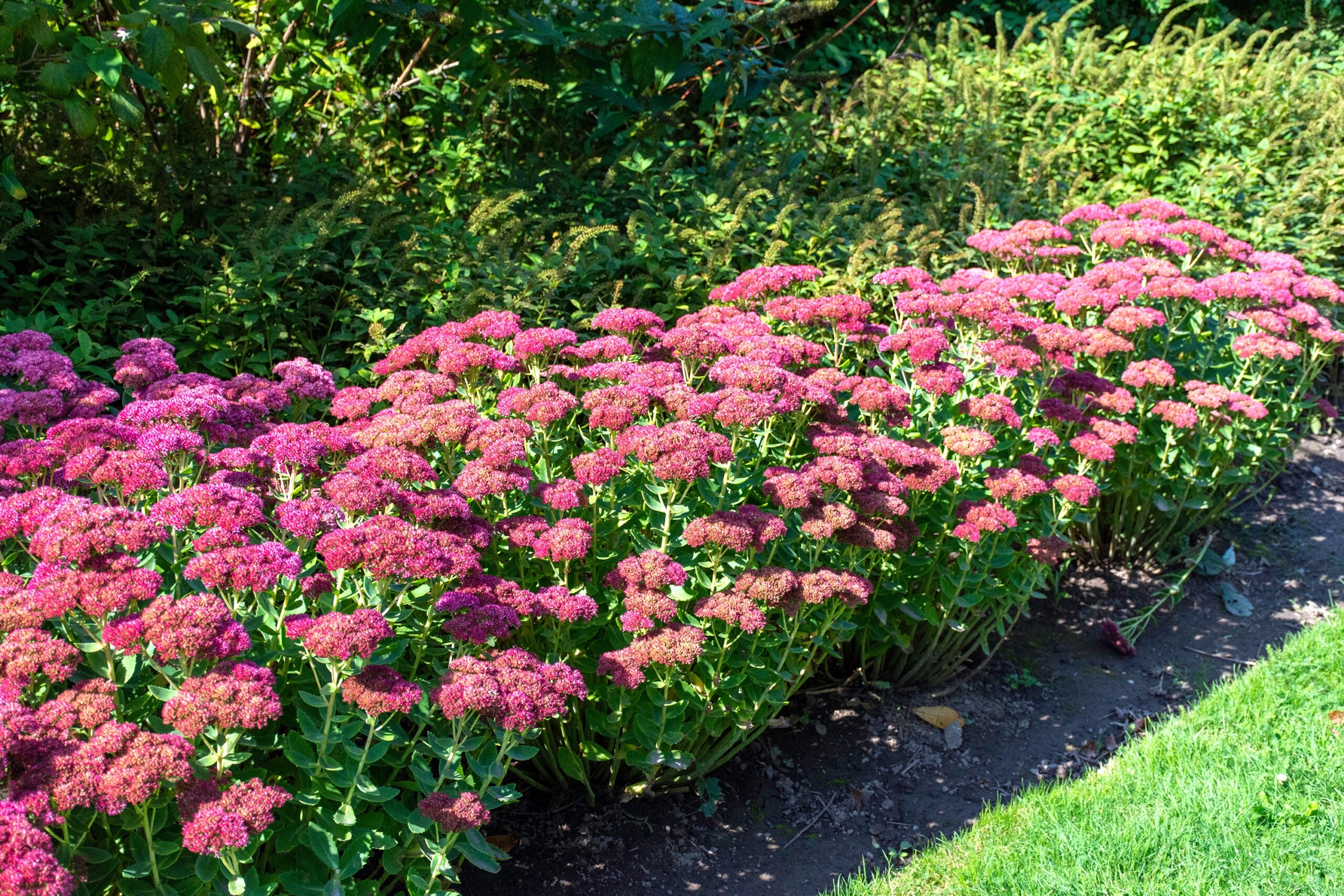
Sedum isn’t overly picky about soil and absolutely adores full sun. Forget to water it? No sweat. This plant just carries on, like the garden version of a survivalist with a bunker.
Its blooms in late summer attract bees and butterflies too, giving your border a literal buzz of energy.
Sedum’s neat, compact habit makes it ideal for clean, defined edges—and if you ever decide to rip it out (why though?), it doesn’t put up much of a fight.
9. Dianthus
Yep, those cheerful, pink-hued blooms your grandma planted? Still absolute winners.
Dianthus (a.k.a. pinks) is like the vintage bike with a basket—classic, charming, and somehow always on-trend.
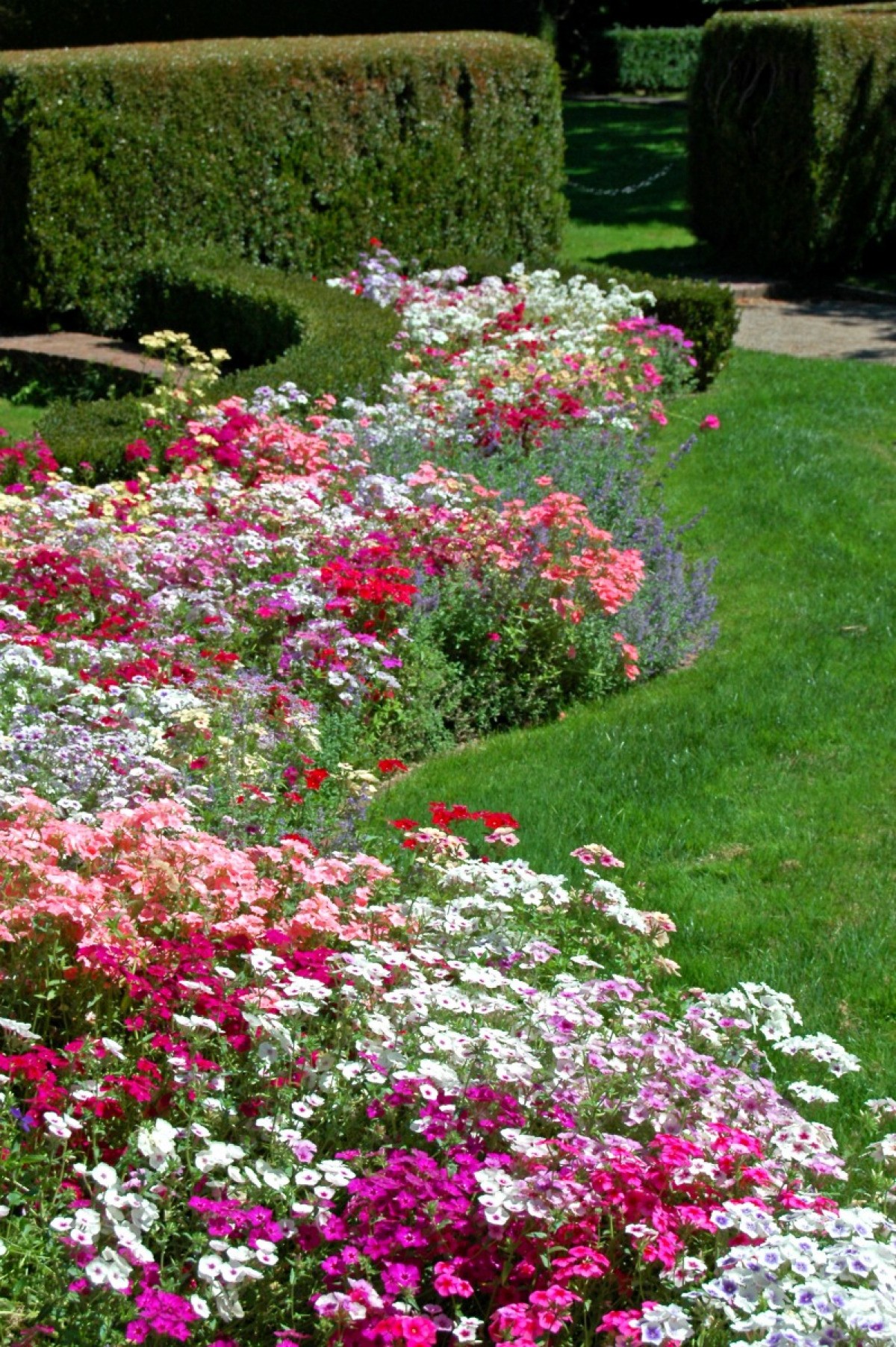
I love planting these at the front of a border. Their fringed, candy-colored flowers bloom heavily and smell like cloves, which is honestly a surprise bonus.
They don’t get leggy or wild, holding their dome-like shape nicely to keep paths tidy.
They’ll keep pumping out those little blooms with regular deadheading—which is a fancy way of saying “snip the spent flowers because it makes stuff grow better.”
Just give them full sun and well-draining soil, and they’ll be showing off for months.
10. Thrift (Armeria)
Want a plant that looks like it’s wearing pom-poms? Of course, you do!
Thrift, or Armeria, grows in tidy little tufts of grass-like foliage topped with round, cheerful flowers that bob in the breeze like tiny parade floats.
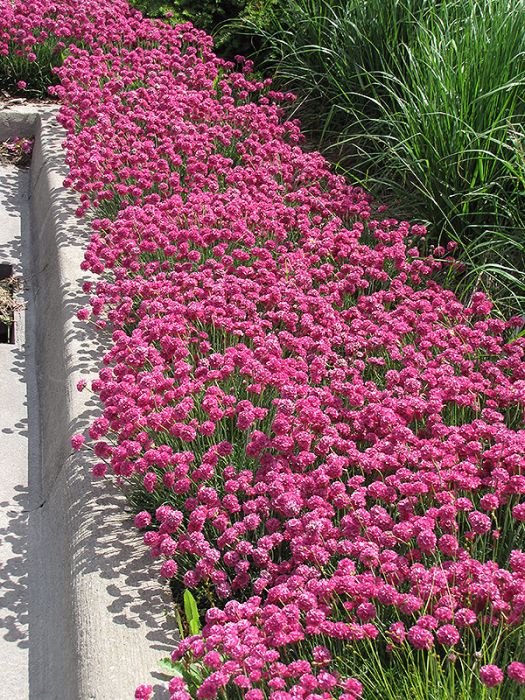
It thrives in rock gardens, sandy soil, and pretty much any borderline abusive conditions you throw at it. I stuck it in a dry, sunny corner where other plants died of thirst—and it thrived like it was on vacation.
What I really love is how neatly it grows, making it utterly perfect for edging. It doesn’t flop or wander. It’s like that friend who shows up on time and brings snacks.
It blooms in pink, white, or lavender and creates a tidy, upbeat vibe wherever you plant it.
You’ll want full sun and decent drainage—but other than that, it’s pretty chill.
11. Hostas
Yes, I know—Hostas are basically celebrities in the leafy green world. And there’s a reason for that. These guys offer more varieties than your local ice cream shop.
From miniature Hostas that barely brush your ankle to massive ones that could probably double as umbrellas, there’s a Hosta for every garden edge.
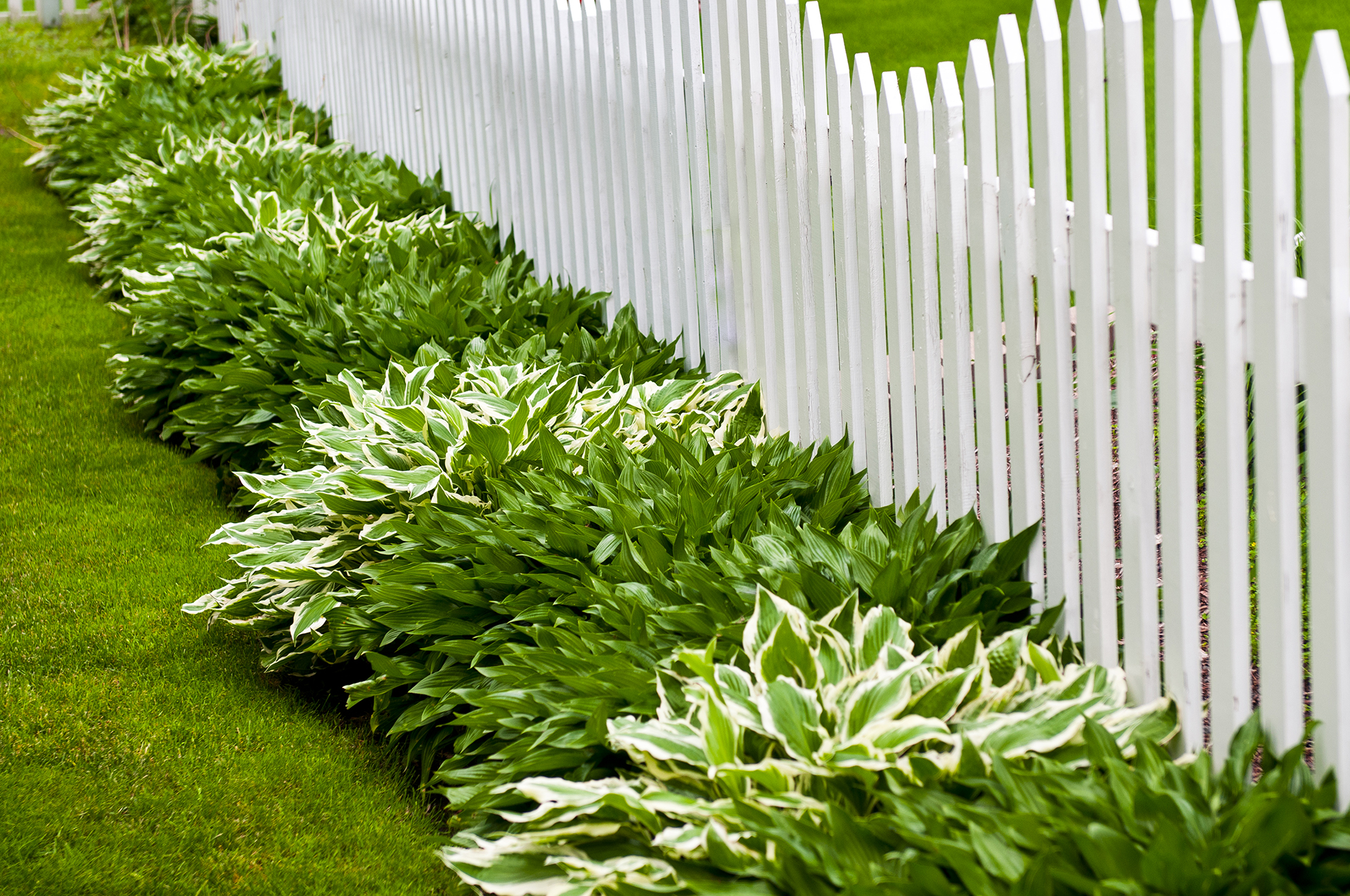
Now, truth be told—they’re not flower show-offs. Sure, they bloom with spikes of lavender or white in summer, but really, we’re here for the foliage. The color and texture combos are unreal. Greens, blues, variegated whites, even golds—Hostas are living art.
I use compact varieties like ‘Blue Mouse Ears’ or ‘Golden Tiara’ along shady borders, since they thrive in those darker corners where your sun-loving plants would rather just wither dramatically.
Just a heads-up: Slugs love Hostas more than you do. So keep an eye out, especially after it rains. (My personal method? Beer traps. At least someone’s enjoying the booze.)
12. Ajuga (Bugleweed)
Not gonna lie—the name “Bugleweed” doesn’t exactly scream elegance. But don’t let the name fool you, Ajuga is fantastic.
It lays low, spreads beautifully, and delivers this glossy, dramatic foliage that ranges from purple to bronze, depending on the variety.
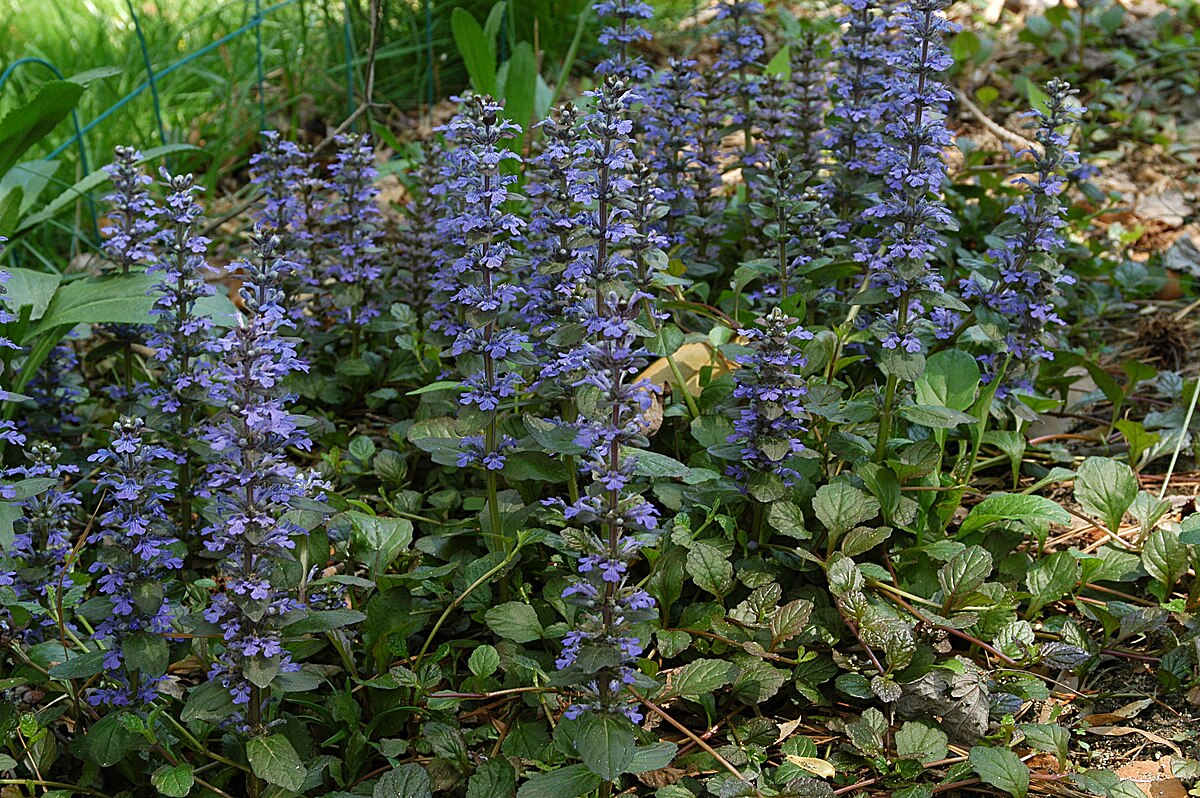
And here’s the kicker—it pushes up these little spikes of blue-purple flowers in spring that look stupidly cute. I always feel like mine are whispering, “Hey, you noticed me!”
I’ve used Ajuga in both shady and partially sunny areas, and it’s done really well in both. That said, full blazing sun isn’t its jam, especially in hot climates.
Once it takes hold? It’ll gently spread and fill gaps like it’s reading your mind. Great for covering bare soil at the edge of beds or in between stepping stones.
Quick note: Ajuga tends to run a little rampant in the perfect conditions. So unless you’re cool with it taking over like an overzealous party planner, give it a border to keep things in check.
13. Blue Fescue
Looking for texture? Movement? Something that sways photogenically in the wind like it’s in a shampoo commercial? Meet Blue Fescue.
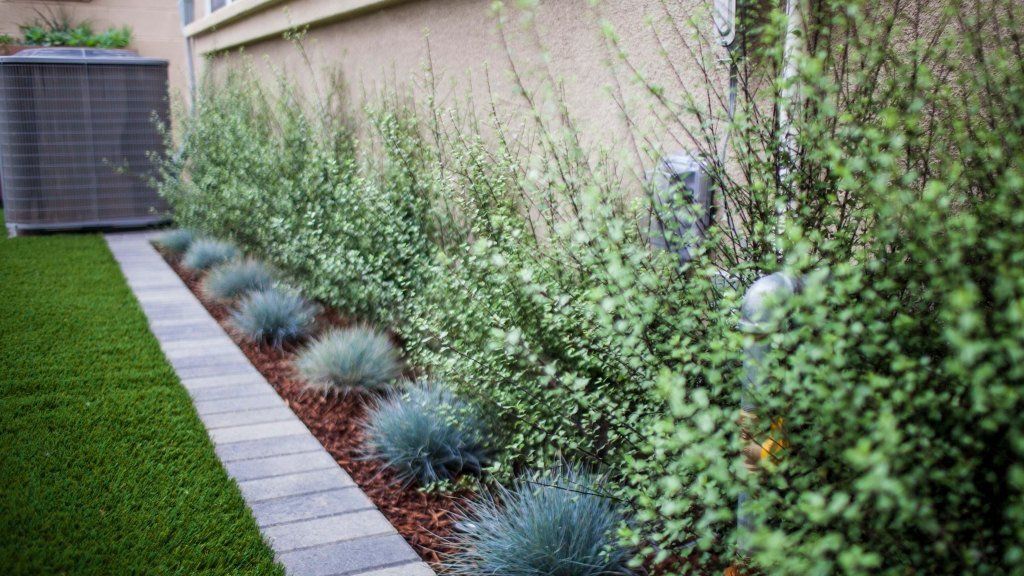
This spiky little grass brings cool tones and serious structure to your borders. Its silvery blue color makes it stand out in all the best ways—great for modern-looking landscapes or for adding contrast to warm-toned flowers.
I first planted Blue Fescue alongside my all-white flower bed, and the results were chefs kiss. It’s like they were made for each other.
It wants full sun and decent drainage, but otherwise? Super low key. Doesn’t need pruning, rarely deals with pests, and stays tidy all year round.
Bonus: It’s evergreen in most climates, so you won’t be staring at bare dirt all winter like you do with some seasonal divas.
14. Nepeta (Catmint)
Alright, Catmint may not win Cat of the Year, mostly because it’s a plant and not an actual feline. But if you want soft, scented borders that bloom like crazy, Nepeta’s got you.

It looks a bit like Lavender’s less fussy cousin. Soft gray-green foliage, clouds of lavender-blue flowers, and a ridiculously long bloom time (seriously—it blooms for months).
I grow it along a sidewalk, and every time someone visits, they pause to rub the leaves. Probably because it smells amazing… but also, it’s weirdly touchable.
It’s perfect for sunny borders and doesn’t mind dry soil. And yes, cats love it too. So if you don’t want the neighborhood strays hosting backyard rave parties, maybe give it a little space.
Also? Deadhead it in midsummer and it’ll rebloom like it’s got something to prove. Petty, persistent, and pretty—what more could you want?
15. Geranium (Cranesbill)
Don’t confuse this with those leggy bedding geraniums you get in pots. Hardy Cranesbill Geraniums are their cooler, tougher cousins.
These gems are low, mounding, and crazy long-blooming. My ‘Rozanne’ Geranium kept flowering from late spring into October one year—without me lifting a finger. (Okay maybe one finger, to admire it.)
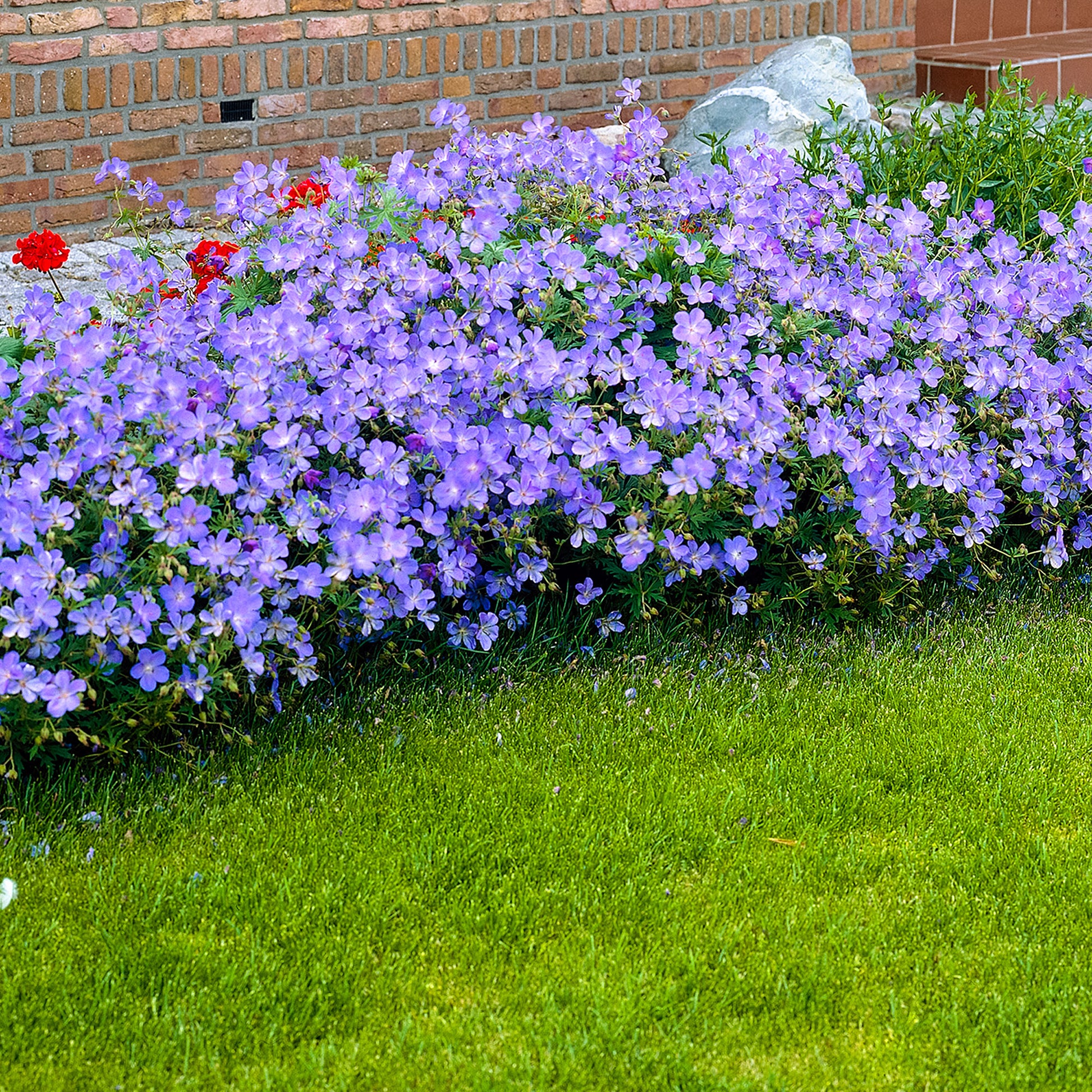
Their cute, cupped flowers come in pinks, purples, and blues, and their foliage stays tidy and turns red or bronze in the fall. Multi-season interest? Yes, please.
They love full or part sun, roll with most soil types, and tolerate neglect like seasoned champions. I’ve planted them along brick borders where nothing else wanted to grow. They filled in like champs and made it all look intentional.
Also great for weaving between other perennials. Zero drama. All charm.
16. Thyme
Who knew your favorite pizza herb could double as fancy ground cover? Thyme is an underrated little rockstar when it comes to edges.
I’ve used creeping thyme varieties like ‘Elfin’ and ‘Magic Carpet’ to line flagstone paths, and I swear it levels up the whole garden by 300%—minimum.
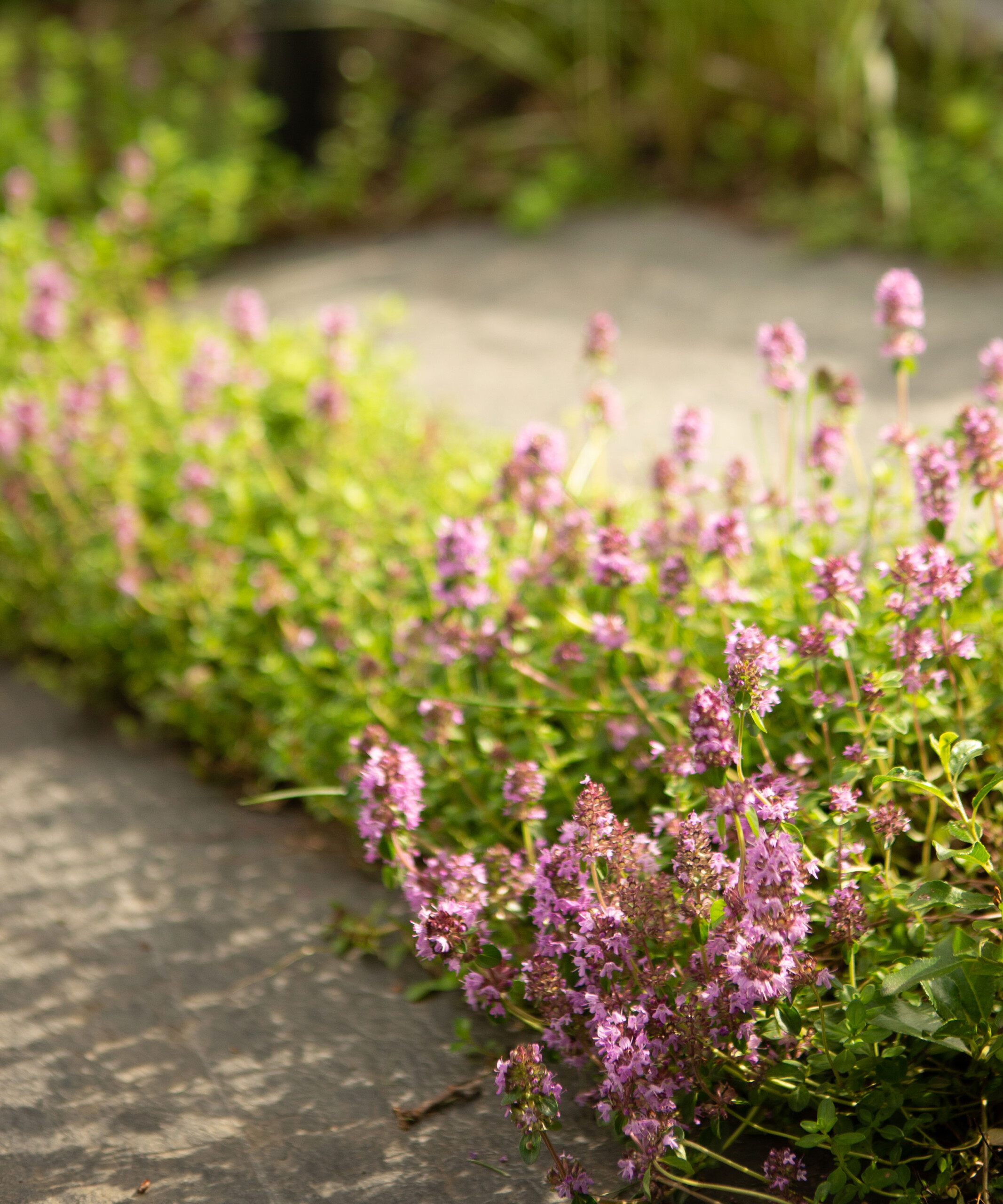
Low-growing, beautifully fragrant, and tolerant of foot traffic, it thrives where you barely remember to water.
The best part? In mid-summer, it blooms with tiny purple or pink flowers that make bees completely lose it. I’m talking full-speed, bumble-frenzy.
Plant it in full sun, with well-drained soil, and enjoy every time you brush past. And yes, you can still harvest tiny bits for cooking—bonus!
Just don’t drown it or plant it in soggy soil. This little herb wants its roots dry and its days sunny.
17. Japanese Forest Grass (Hakonechloa)
If you want a plant with elegance, movement, and just the right amount of drama, Hakonechloa’s your showstopper.
It grows in gentle, cascading clumps of gracefully arching blades, and it thrives in the shade—bless it. It makes the entire garden look… expensive. That’s the best word for it. Luxe.
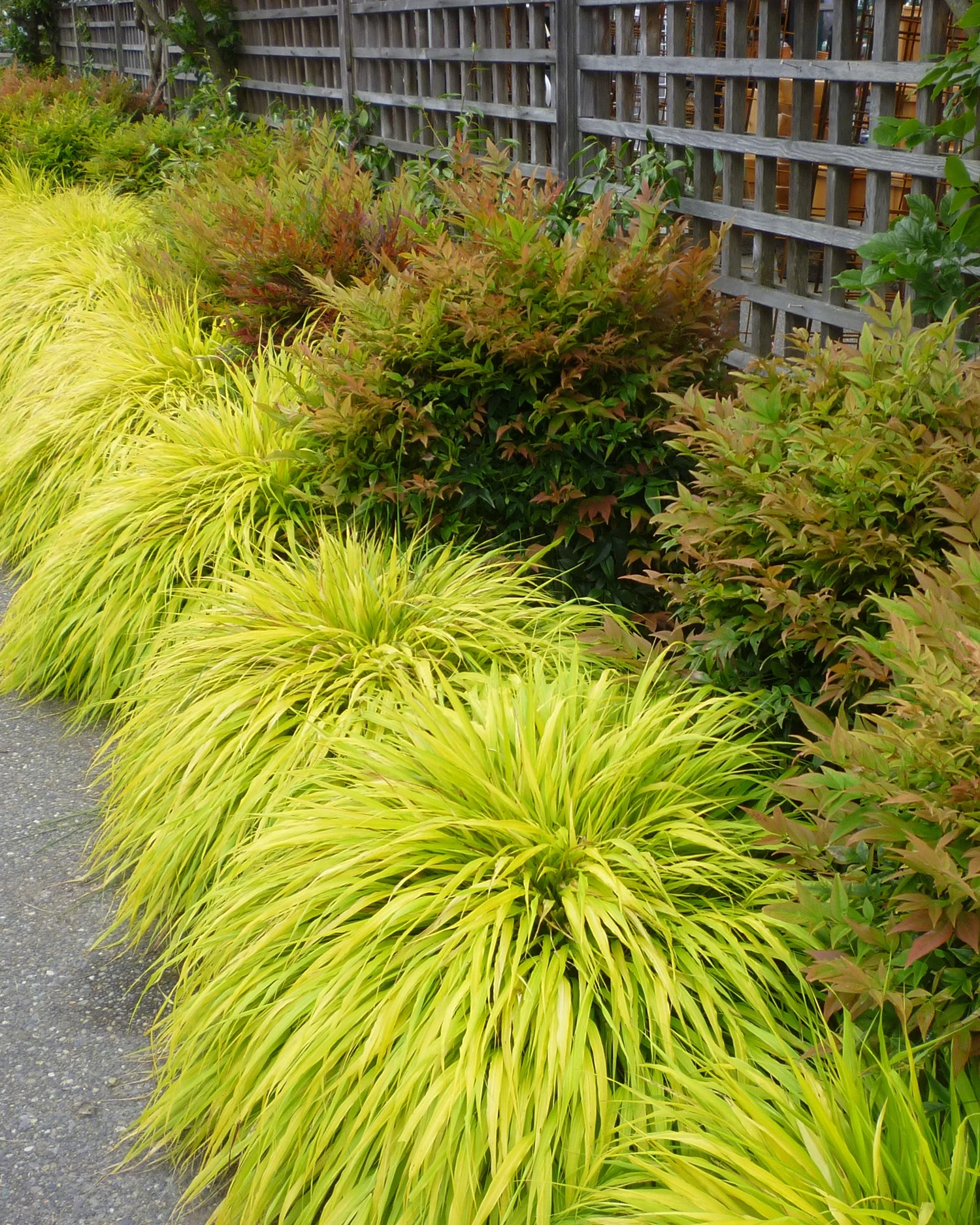
I have it edging a shaded walkway under my dogwood trees, and honest to God, every time someone walks by it, they stop and go, “What is THAT?”
Its bright yellow or variegated leaves literally glow in shady spots, making it the perfect pick-me-up for dark corners.
It’s not exactly fast-growing, so you’ll need a little patience. But once it fills in? So worth it.
Not fond of harsh sun or dry soil, so treat it nice. Think of it like your drama queen friend who looks amazing at brunch but doesn’t camp.
18. Sweet Box (Sarcococca)
Ever heard of Sweet Box? Probably not. It’s one of those criminally underrated hidden gems of the garden.
This evergreen shrub has lustrous dark green leaves, stays compact and tidy, and blooms in early spring with little white flowers that smell like vanilla and honey. No exaggeration—this plant smells BETTER than most perfumes.
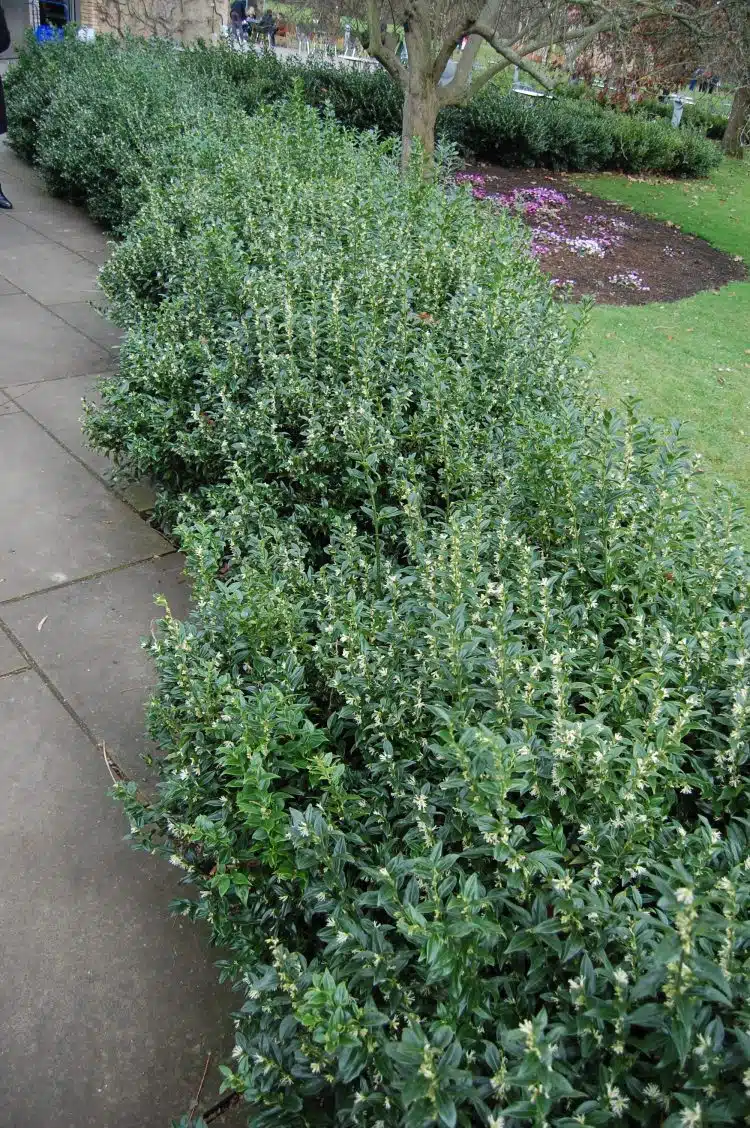
I love using it along shady house foundations or shadowy walkways where flashier plants refuse to grow. It tolerates dry shade, needs little maintenance, and looks great all year.
Plus, those early blooms provide much-needed food for winter-weary pollinators. Immediate gardener bonus points.
If you’ve got a dim corner or just want to wow guests with a surprise fragrance, put Sweet Box on your short list. Might not win a beauty contest, but it’ll definitely win hearts.
19. Spotted Dead Nettle (Lamium)
Dead Nettle sounds like something out of a Halloween special, I know. But it’s actually super charming.
This trailing groundcover has variegated leaves that shimmer in the shade, plus lovely pink, purple, or white flowers through spring and early summer.
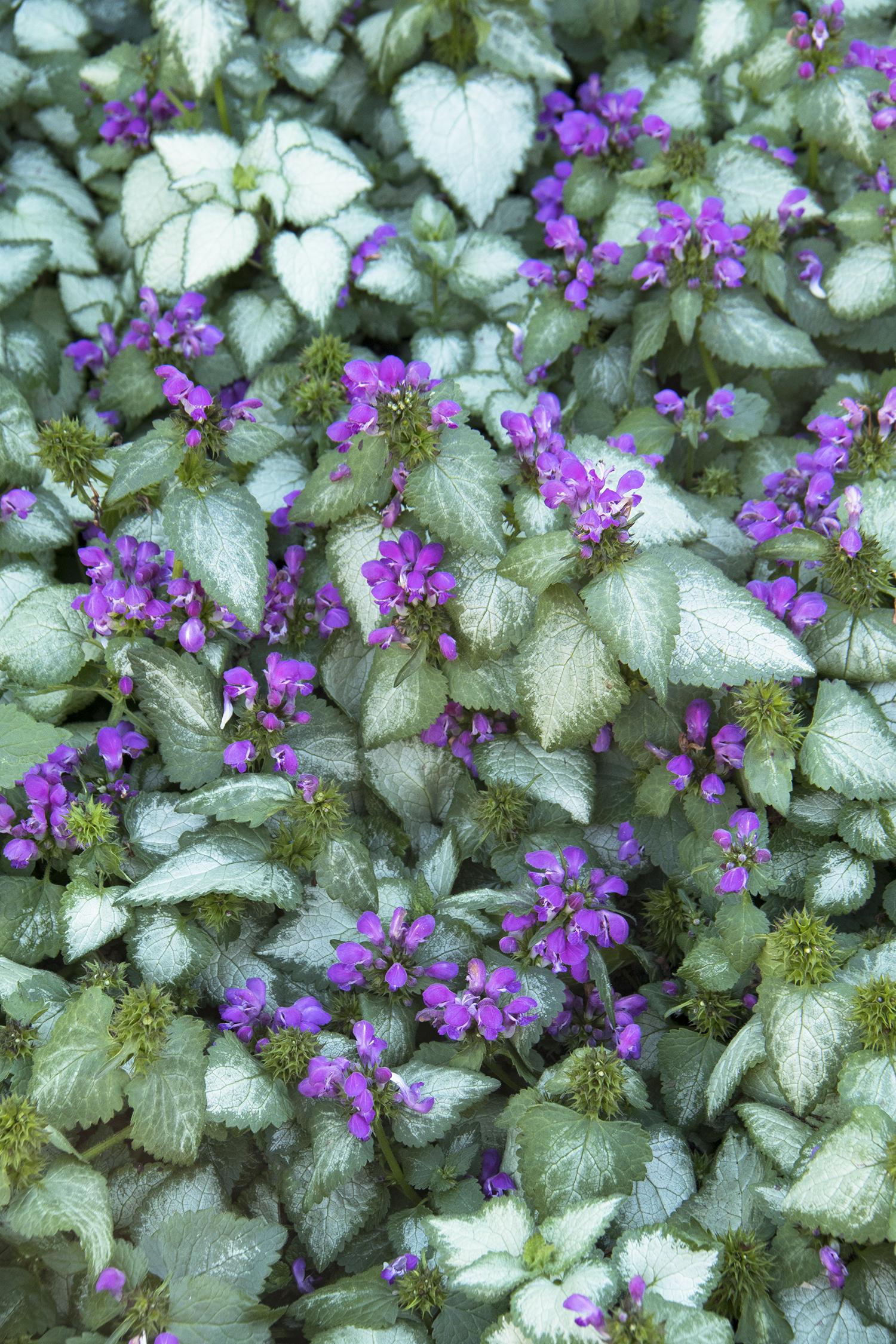
What I love? It creates this cool, frosted effect along the edge of shady paths or around the feet of taller plants. It’s like a natural highlighter—all glow, no glitter.
Lamium spreads but not obnoxiously, and it stays fairly small, so it won’t bully the rest of your plants. Choose a variety like ‘Pink Pewter’ or ‘White Nancy’ for a pop of light in darker areas.
It doesn’t even mind less-than-perfect soil, and deer usually skip right over it (hard pass, apparently).
A little trim in late summer to freshen it up? Easy peasy.
20. Creeping Phlox
Here’s one of my absolute favorites: Creeping Phlox.
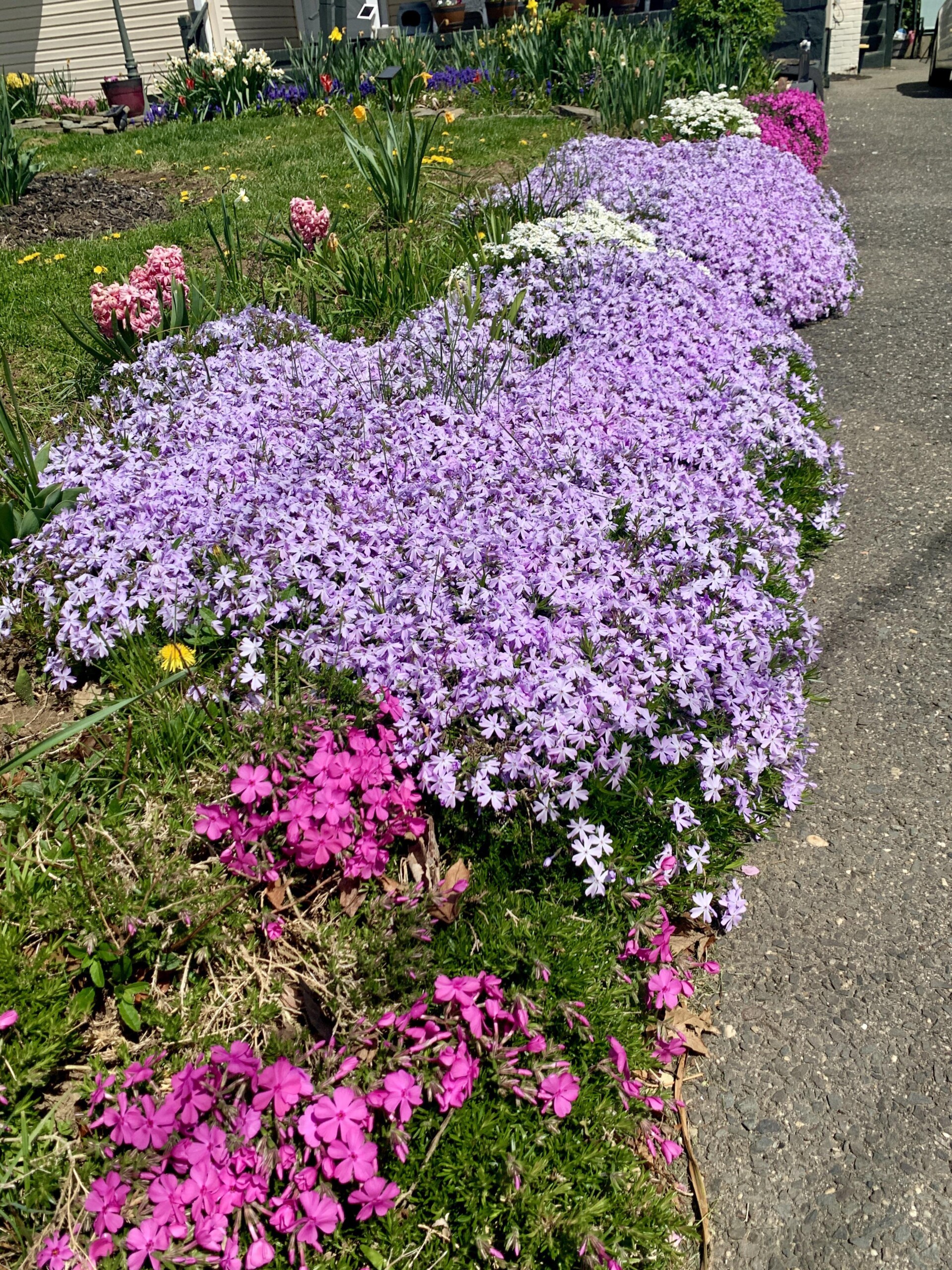
This beauty can smother a rock wall in blooms like it’s auditioning for its own reality show.
Come spring, it explodes in mats of lavender, pink, fuchsia, or white flowers, all while staying under 6 inches tall. Yes, it’s THAT showy. And no, it never apologizes for it.
I’ve seen people stop mid-jog just to take photos of the phlox lining my neighbor’s walkway. And honestly? I’ve done the same.
Once it finishes blooming, you’re still left with a tidy evergreen mat that holds the space nicely. Works best in full sun and well-draining soil.
And bonus—bees and butterflies flock to it like it’s giving away free drinks.
21. Helleborus (Lenten Rose)
Closing it out with some moody, early-season drama queens—Hellebores. They bloom in late winter or very early spring when nothing else dares to show up.
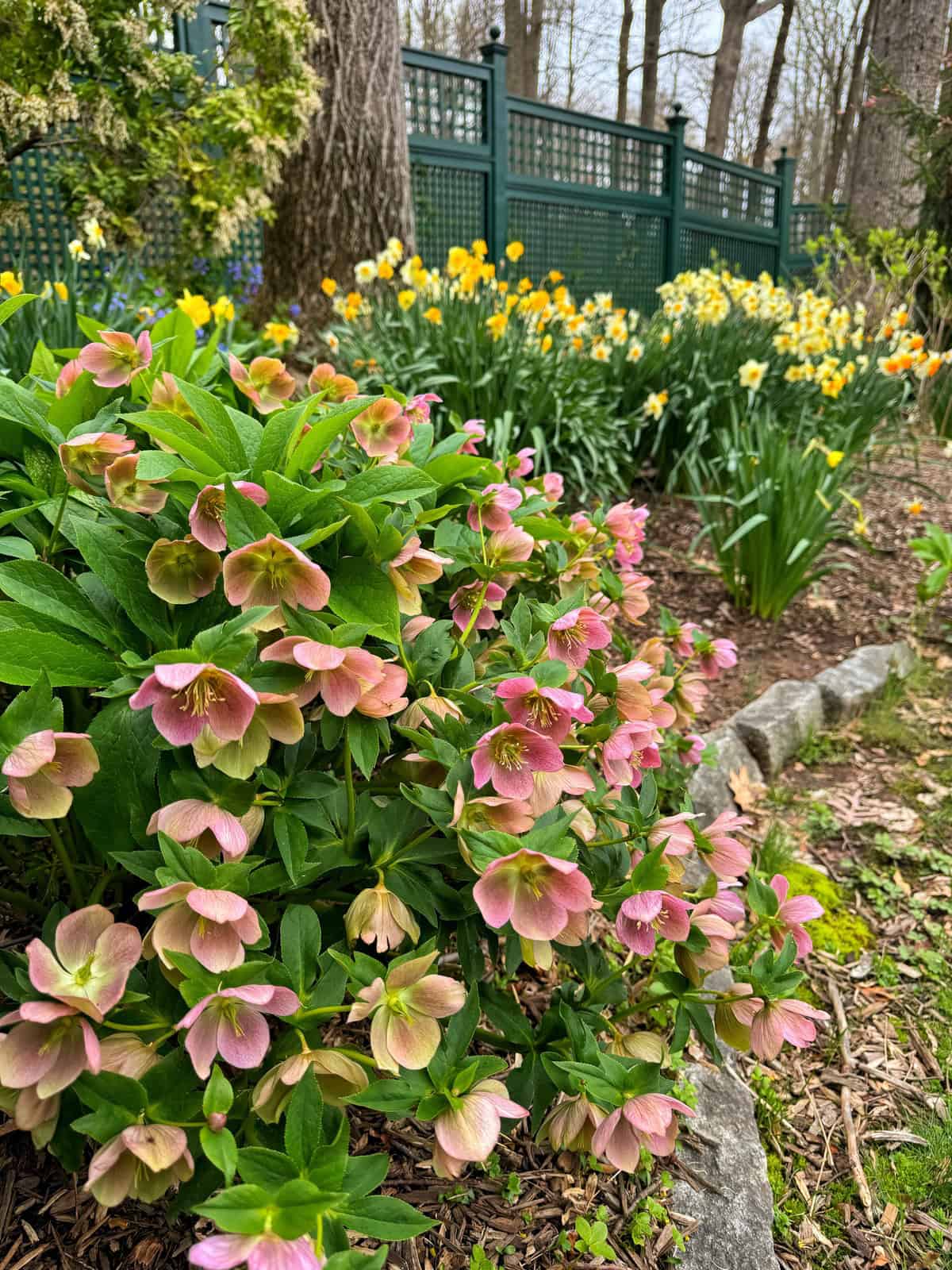
They offer gorgeous, nodding blooms in deep purples, creamy whites, blush pinks, and sometimes even freckled hybrids that look hand-painted.
I grow them along a shady evergreen border, and their dark, leathery foliage looks great year-round. Plus, deer? They usually take one bite, make a face, and never touch them again.
Hellebores love moist, rich soil and filtered shade. They’re slow to start but get better every year—the plant version of a fine wine.
Edge your borders with these and enjoy random bursts of “Wait, are those blooming already?” compliments during February, aka The Month of Misery.
Wrapping It Up: Your Garden, But Better
So there you have it—21 of the best edging plants to give your garden that polished, intentional, “yes-I-actually-know-what-I’m-doing” look. Whether your style is structured and sharp or wild and whimsical, there’s an edging plant here that suits your vibe.
I’ve personally used a good chunk of these in my own space, and I can tell you—the transformation is real. A messy flower bed instantly looks curated with the right border plant. A dull path suddenly feels enchanted. Your neighbors stop and compliment you. (Okay, some of them just stare judgmentally, but that says more about them than your superb edging choices.)
Still not sure where to start? Let me break it down:
- Go for Boxwood or Blue Fescue if you like your borders neat, tidy, and on autopilot.
- Lean toward Creeping Jenny, Thrift, or Sedum if you want that “I’m effortlessly charming but slightly over the top” look.
- Need drama and color? Heuchera, Dianthus, and Japanese Forest Grass are here for you.
- No sun? Bring on the Hostas, Sweet Box, Lamium, or Hellebores—seriously, they thrive in the shadows like goth queens of the garden.
And if you’re still not sold? Just pick one—yes, one—and try it in a small spot. Watch what it does. Chances are it’ll make you wonder why you didn’t try this years ago.
A Few Final Tips (Because I Can’t Help Myself)
Don’t overcrowd. I get it. You’re excited. You want ALL the plants. But give each one the space it needs to actually do its thing—or it’ll just become a jungle turf war.
Layer smart. Edging plants go in the front (duh), but also think about how their colors and textures complement what’s behind them. It’s like picking the right necklace for your outfit—it matters.
Watch the spreaders. Some of these beauties (looking at you Creeping Jenny and Ajuga) don’t know how to take a hint. Keep them contained, or prepare to host an intervention.
Mix evergreen and seasonal. This creates all-season interest and keeps your garden looking alive even in the bleakest months. Because nothing’s more depressing than a border full of regret and dead twigs.
Learn from mistakes. You’re going to plant something in the wrong spot. It’s fine. Gardening is just nature’s way of letting us practice being patient. And maybe lifting a shovel now and then.
One Last Thought…
Listen—we all start somewhere. You might feel overwhelmed looking at a list of 21 options, wondering how on earth you’re going to remember what “Lamium” is without Googling it again (you’re not alone). But you don’t need to memorize Latin names or have a color-coded garden journal to create a beautiful space.
Start with what feels fun. Maybe it’s a few Alyssum around your mailbox. Or some Lavender lining the path to your porch. Maybe it’s experimenting with Heuchera just to see how many colors they come in.
Whatever it is—make it yours. Let your lawn and garden tell your story. Even if that story includes a few rabbit-nibbled Hostas and a mildly aggressive thyme patch.
Now go out there and edge like a pro.
Or, at least, like someone who read a solid blog post. 😉